How to Get Your Dead Orchid to Grow Again
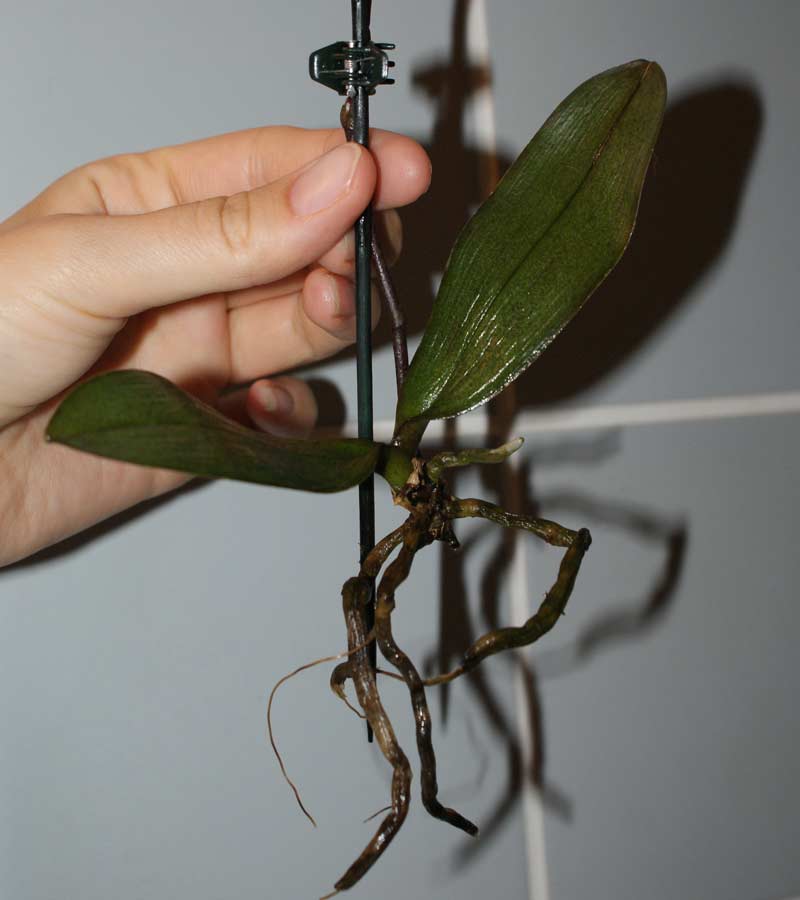
I tin can't even count how many times I've come up beyond with people panicking about their dying orchid, asking what they can do to salvage it.
And of course, I've had orchids too, that have shown signs of distress and approaching death. I've brought home several dying orchids from the clearance table, wanting to nurture them back to life.
And then if you lot have a dying orchid in your hands, and yous have come up hither for help, yous're in the correct place. In most cases, with the proper intendance and immediate action, the orchid tin exist saved.
Depending on the issue, the orchid can be saved by re-potting, trimming off all the dead roots, cutting out leaves with spreading bacterial infection, relocating the plant, or by stimulating root growth.
Below, we'll get through different common scenarios in more detail. To save your orchid, the get-go pace is to diagnose what's killing it.
Orchid with Root rot
One of the about common problems with orchids is root rot. This is mainly caused by overwatering the plant. Maybe information technology was left standing in water for long periods of time, which is a sure way to impale an orchid.
Root rot can besides be acquired by decomposing media because it turns acidic and therefore starts to damage the roots. Also, potting media that is too meaty will suffocate the roots.
The way to diagnose root rot is past merely pulling out the plant from its pot. Remove all the media and inspect the roots; if they look mushy and dark in color, the diagnoses is indeed root rot.
All the bad roots need removing – you want to go rid of the dead weight! Cut with sterilized scissors or pruners, and spray with Hydrogen peroxide iii%. Repot in fresh orchid media.
From here on, make sure not to over-h2o your orchid. It must dry in-between waterings to avoid root rot from happening again.
You lot can read my article "How to h2o your orchid" for more instructions.
Dehydration
Another common problem with orchids is underwatering. Even though the orchid media needs to dry in-between waterings, the plant doesn't like to exist dry for many days on a row. It will start to suffer quickly.
Therefore, you should never neglect your orchid for long periods of time.
During summer the media will dry faster. Depending on your climate, the type of potting media you use, and even on the orchid itself, the watering needs can vary drastically.
Just because information technology was enough to water the orchid every three weeks during winter time, doesn't mean that'south enough during spring and summertime.
Alternatively, perhaps you did water oft enough, but the method of watering wasn't sufficient, causing the roots to dry slowly.
Sometimes you tin even bring home a brand new orchid that is already showing signs of dehydration.
Firsthand visible signs of aridity are wrinkly floppy leaves and very dry media (bark/moss). If the pot is articulate plastic, yous tin can detect dry out roots even before taking the plant out of its pot.
Here'due south how to bargain with dehydrated orchids; Afterward removing the one-time media, soak the roots in water or rinse nether a running tap – always utilise lukewarm water, and don't go the constitute itself wet. Moistening the roots will help you see which roots are all the same alive and salvageable, and which to cut off.
With sterilized scissors or pruners, cut off all the dead-looking roots.
- Spray with Hydrogen peroxide 3%.
- Permit air-dry for a moment and repot in fresh media.
- Water the orchid and put bated.
In an extreme case of dehydration, until the orchid starts to show signs of rehydration, you can use the container/plastic handbag trick explained beneath under the section "How to relieve an orchid without roots?".
From here on, make certain your orchid is watered as needed, to avoid dehydration from happening again in the futurity. Meet my article How to h2o your orchid for more than information.
Crown Rot
Crown rot is i of the more severe issues affecting orchids. It occurs when water has gone within the crown, which leads to rotting over fourth dimension.
In nature, as orchids grow in the air, they abound sideways or 'upside-down' – this fashion, the crown can't collect water, and therefore crown rot can't occur.
As houseplants, we grow orchids upright, exposing the crown – if any water goes inside of it, which tin quickly happen if not careful with watering, this tin presently pb to crown rot.
If you always go water in the crown, accept some paper towel and put the corner of it inside the crown; go along it in that location until as much water as possible has been absorbed.
How to know your orchid is suffering from crown rot?
The crown has turned black, and some of the leaves might be falling off. Remaining leaves tin be yellow by the crown.
The chances to salve an orchid from crown rot aren't the all-time, merely you tin still get ahead and try.
Unpot the orchid and remove the former media; remove all the mushy or dead roots, and spray the whole plant with Hydrogen peroxide iii%.
Permit air-dry for a moment, and so wipe off any excess water left behind. Repot the orchid in a make clean pot using fresh potting media. Make sure non to pot the orchid likewise deep in the media, every bit we want the crown to stay dry.
Adjacent, apply ground cinnamon in the crown – this limits the fungal infection and prevents it from spreading.
Now all yous tin do is wait and hope for the all-time. Water your orchid as required.
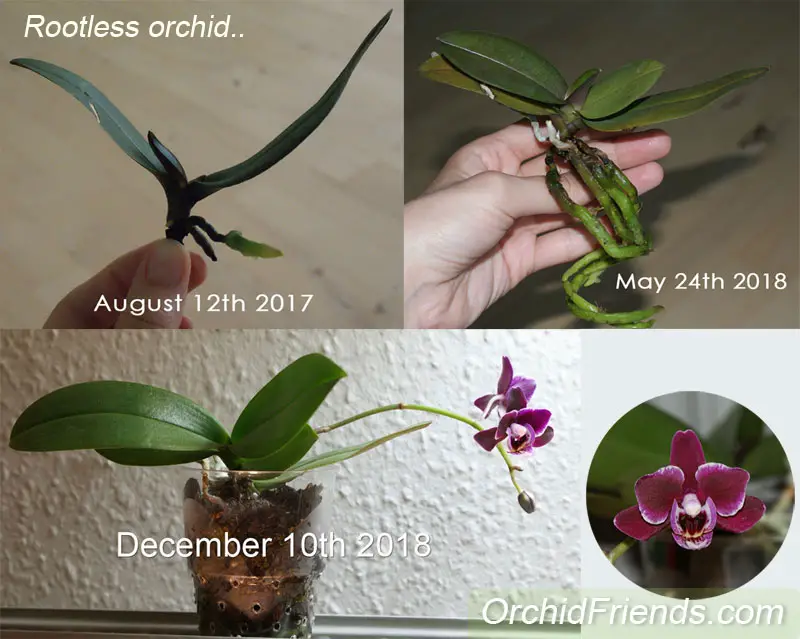
How to save an orchid without roots?
Information technology'south not unheard of to have an orchid without roots – maybe information technology lost them due to aridity or root rot. Either mode, there's still a chance you tin save your orchid.
Start by cutting off all the 'dead weight' with sterilized scissors or pruners. Spray with Hydrogen peroxide 3% to eliminate whatever fungus or rot. Repot using fresh potting media.
Next, identify the constitute inside a see-through plastic container with a lid on. This creates a humid environment for your orchid. Due to being left with very few to none roots, it needs additional humidity to survive.
This can be absorbed from the humid air through the leaves. So as a temporary assist, y'all tin place your orchid inside a plastic container – fifty-fifty a plastic bag will do. Give information technology fresh air daily, or every few days.
Sunburn
Overheating can occur when the orchid is placed in direct sunlight during hot temperatures. Sunburn causes the leaves to plow yellow, so it's quite easy to diagnose.
The starting time affair you need to do is to immediately relocate your orchid. Observe a place in your orchid room where the plant tin can still get enough of bright light – somewhere near the window, but far plenty out of directly sunlight.
If you alive in a libation climate, information technology'due south fine to keep your orchids on the windowsill, just move them further in the room once the warm flavour starts.
The sunburned leaves will autumn off naturally, but you tin also cut them off.
Over-fertilizing
If you accept exceeded the dosage recommendations on the fertilizer bottle, at that place's a practiced gamble you've over-fertilized your orchid causing root fire.
What you can practise with a mild example of root burn, is to flush out the excess fertilizer from the media and roots, by soaking it.
Repeat once or twice to ensure yous've flushed out as much of the fertilizer equally possible.
With an extreme case of root burn, it'southward better to repot the orchid. Cutting out all the dead roots with sterilized scissors/pruners, rinse or soak with clean h2o, and repot in fresh potting media.
When using fertilizer, it'southward important not to over-fertilize. The safest way to become is to requite only one-half of the recommended dosage.
Many orchid growers swear by "Weakly, weekly." However, it's up to you if you want to use fertilizers all the fourth dimension, only occasionally, or never.
Drastic temperature changes
Orchids are sensitive to farthermost temperature changes. Too common cold causes 'common cold stress', and too hot 'heat stress.'
In both cases, yous demand to relocate your orchid into a spot that is neither as well hot nor besides cold.
Cutting out whatever affected leaves, sealing the cut marker with powdered cinnamon. Check the roots.
Determination
I hope this article has helped y'all detect what's wrong with your orchid, and how you can save information technology.
It'due south all-time to make a habit to check your orchids regularly; inspect for any changes. The sooner yous detect a problem, the better gamble you have to save a sick orchid!
Pests, rotting, sunburns, dehydration – and so many issues tin arise. Luckily with the correct care, most orchids can be saved.
Cheers for reading, and expert luck with saving your orchid!
Until side by side time, orchid friends!
Perhaps you want to learn more:
Source: https://orchidfriends.com/how-to-save-an-orchid/

Post a Comment for "How to Get Your Dead Orchid to Grow Again"